SOC as a Service
Detect, respond to and prevent security incidents 24/7 with our SOC360 team.
SOC based on a single support line
Increasingly complex cyber threats require organizations to implement modern and flexible defense structures. The traditional Security Operations Center (SOC) model based on three support lines, where each line performs specific functions and tasks, is outdated and inefficient.
Splitting tasks across different lines, through an artificial division into stages, prolongs the incident handling time. Additionally, this method can cause communication and coordination issues within the organization, as each team specializes in different areas and lacks a complete picture of the situation.
The single-line model offers a more expert and flexible approach; all analysts have a similar level of competence, undergo the same training program, and use the same tools. Working on a single support line allows for faster and more effective incident management, as each team member is able to independently conduct analyses and make decisions.
Single support line means:

Faster reaction time
Security threats are resolved immediately upon detection, without delays resulting from escalation through subsequent SOC lines. This significantly helps shorten response times and minimize potential damage.

Increased productivity
In the traditional model, time and resources are wasted on unnecessary steps related to escalation. The single-line model bypasses these steps, allowing analysts to respond directly to threats.

Better knowledge flow
In the single-line model, all team members are involved in handling a broader range of threats, which leads to skill development, better knowledge sharing, and reduced turnover.

Constant readiness
Unlike the traditional model, where the availability of qualified personnel may be limited by schedules, the single-line model ensures organizations a constant level of readiness to undertake complex tasks.
SOC360: MDR built on expertise
SOC360: MDR built on expertise
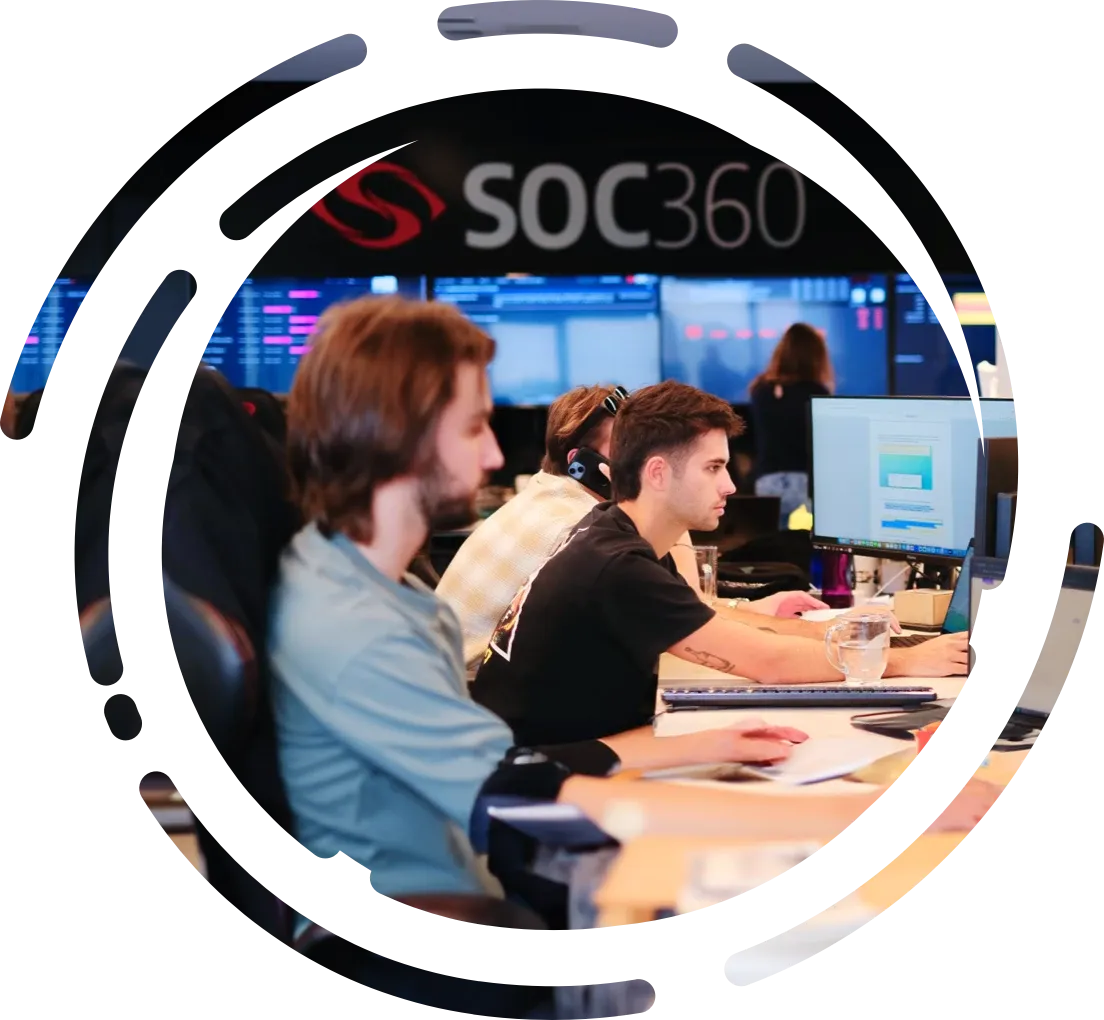
SOC360 is a team of forty, highly skilled experts who analyze issues at the source, leveraging telemetry data from advanced EDR and NDR systems as well as other cybersecurity monitoring platforms. Our SOC service, enhanced with Managed Detection and Response (MDR), is built on a single-line model that guarantees fast and effective incident reponse.
It's a model that collapses traditional multi-tiered, hierarchical security teams into one, agile unit where all analysts possess similar high-level skills, training, and tool access.

24/7 infrastructure monitoring based on proactive security systems (EDR, NDR) and SIEM analysis

Fast and efficient alert analysis and incident mitigation in real-time

Monitoring of digital identity security systems and email (Microsoft 365, Google Workspace)

Detailed incident reports compliant with NIS2 requirements

Digital forensics and incident response (DFIR)

Attack surface monitoring (ASM)

Threat hunting – actively searching for traces of malicious activity within the organization

Detection Engineering – creating detection rules that are not natively available in security systems

Vulnerability scanning and management

Phishing awareness campaigns for employees along with management

SOC Academy – training for internal SOC teams

Security tool analysis and comparison – supporting clients in investing in new technologies

Cyber Threat Intelligence – the latest threat information delivered through newsletters and support for XCTI platforms
Sleep peacefully, and we will take care of your business's security.
Talk to the expert
SOC360 covers all leading cybersecurity technologies with its services
The SOC360 service is integrated with the security solutions used in your company. If your organization does not have its own systems, we will increase the visibility of protected environments by providing top-tier technologies.