IT and OT Security

in the Food Industry

Cybersecurity is becoming one of the key challenges for the food industry

As Fortinet data shows, as many as 30% of food industry companies plan to invest in cybersecurity within the next 12 months, and over 70% fear that a cyberattack could impact not only finances but also consumer safety. At the same time, the sector faces lower digital maturity than many other industries, increasing its exposure to cyber threats. The consequences of cyberattacks can be severe — from production downtime and financial losses to regulatory issues and even risks to public health.

Additionally, as an important entity under NIS2, the food industry must meet specific requirements related to risk management, incident reporting, and the implementation of appropriate security measures.

Key Cyber Threats in the Food Industry:

Integration of IT and OT Systems Increases the Attack Surface
Modern food production facilities integrate business systems (ERP, MES) with industrial control systems (ICS/SCADA, PLC) responsible for processes such as temperature control, mixing, packaging, and product storage. The integration of these environments increases the risk of threats spreading from IT networks to production infrastructure, which can directly impact food quality and safety.
Legacy Industrial Infrastructure (Legacy OT)
Many production facilities still operate control systems designed decades ago that were not built with cybersecurity in mind and often cannot be easily updated.
Complex Environment of Food Production Systems and Devices
Production lines in food manufacturing facilities include a wide range of systems and devices, such as PLC controllers, industrial automation systems, IoT sensors monitoring temperature and storage conditions, as well as equipment responsible for processing, packaging, and quality control. Such a complex technological environment often makes comprehensive monitoring and rapid detection of security incidents more difficult, increasing the risk of unnoticed threats.
Risk of Recipe and Quality Data Leakage
Food manufacturing facilities process sensitive data such as recipes, product compositions, production parameters, and information related to quality and regulatory compliance (e.g., HACCP). Leakage or manipulation of this data can lead to loss of competitive advantage, regulatory non-compliance, and serious business consequences, including product recalls and loss of customer trust.
Disruption of Food Production Parameters

A cyberattack targeting industrial control systems can impact production parameters such as temperature, composition, or processing operations, directly affecting food quality and safety.

Production downtime in food manufacturing facilities can lead not only to financial losses, but also to spoilage of raw materials and finished products, the need for disposal, and risks related to food safety compliance.

Cybersecurity Risks in the Supply Chain
Food production relies on a complex network of raw material suppliers, logistics companies, system integrators, and technology partners. The numerous connections and dependencies between these entities increase the attack surface — cybercriminals often exploit less secure partners as an entry point into the manufacturer’s infrastructure.
Unsecured Remote Access to Food Production Systems

Food manufacturing facilities increasingly rely on remote access to automation systems, maintenance services, integrator support, and production monitoring solutions. If this access is not properly secured, it can become an easy path for attackers to take control of production processes.

The consequences of a successful attack may include production downtime, manipulation of process parameters (such as temperature or composition), deterioration of product quality, as well as significant financial and operational losses.

Key Technologies and Processes Supporting IT and OT Security in the Food Industry

technologies
technologies

Endpoint Detection and Response solutions monitor activity across workstations, servers, and systems supporting food production, detecting malware, privilege escalation attempts, and unusual user behavior. They provide a critical layer of protection against ransomware attacks that can lead to production downtime, loss of quality-related data, and disruption of operational continuity.

Network Detection and Response solutions provide full visibility into network communications, including OT environments where deploying agents is often not possible. They enable the detection of anomalies, suspicious connections, and unauthorized communication between production systems, which is critical for protecting processes that directly impact food quality and safety.

Dividing infrastructure into security zones (e.g., IT and OT) limits the spread of threats between business and production systems. The use of next-generation firewalls and microsegmentation enables control over traffic between production lines, quality systems, and the IT environment, minimizing the risk of process disruption and unauthorized access to critical data.

Privileged Access Management solutions secure access to critical production and quality systems through the control and monitoring of privileged accounts. They reduce the risk of unauthorized actions, abuse, and takeover of systems responsible for food production parameters.

Data Loss Prevention solutions protect sensitive information such as recipes, product compositions, production parameters, and quality data. They help prevent both accidental and intentional data leaks, which is essential for protecting intellectual property and maintaining compliance with industry standards.

The Zero Trust Network Access (ZTNA) model enables secure, controlled access to production systems and applications without relying on traditional VPNs. Every access attempt is verified, significantly reducing the risk of unauthorized access, especially in remote service scenarios.

DDoS attacks can lead to the unavailability of critical systems supporting food production, such as ERP, MES, quality management systems, or remote access services for maintenance providers. As a result, organizations may lose the ability to manage production and control processes, leading to downtime, delays, and losses caused by spoilage of raw materials and finished products. Anti-DDoS solutions analyze network traffic and filter malicious requests overloading the infrastructure, ensuring business continuity and the stability of production processes.

processes
processes

Food production facilities require continuous monitoring of both IT and OT environments. SOC services provide 24/7 monitoring and rapid response to threats that may impact production continuity and product quality.

The process includes:

  • detection and analysis of security incidents
  • threat classification and assessment of their impact on production
  • threat isolation and mitigation of attack consequences
  • restoration of system operations
  • reporting and post-incident analysis

Regular identification and remediation of vulnerabilities in production and business systems help reduce the risk of attackers exploiting security gaps.

The process includes:

  • vulnerability scanning
  • risk analysis and prioritization
  • planning and secure deployment of patches
  • consideration of production environment constraints (e.g., lack of maintenance windows)

Continuous monitoring of emerging attack techniques helps organizations prepare for threats targeting the food industry.

It enables:

  • identification of new phishing and malware campaigns
  • adaptation of detection mechanisms
  • response to threats specific to production environments and supply chains

Proactive threat hunting for threats that may have bypassed standard security mechanisms is critical in complex production environments.

Analysts:

  • analyze traffic across IT and OT environments
  • identify anomalies affecting production processes
  • detect hidden attacker activity

Development and optimization of threat detection mechanisms tailored to the specifics of production environments.

It includes:

  • creating detection rules for IT and OT environments
  • aligning systems with food production processes
  • reducing false positives and improving detection effectiveness

Food production relies on a complex supply chain that represents a significant attack vector.

The process includes:

  • security assessments and audits of vendors and partners
  • control of system and API integrations
  • monitoring risks related to third-party services

Ensuring the ability to quickly restore production after an incident is critical in the food industry, where downtime can lead to losses of raw materials and finished products.

It includes:

  • creating and testing backups
  • Disaster Recovery plans
  • production system recovery procedures
  • regular testing of emergency scenarios

Separating IT and OT environments limits the spread of threats to production control systems.

The process includes:

  • network segmentation and communication control
  • restricting access to production systems
  • implementing access policies on firewalls
  • monitoring traffic between environments

This makes it possible to effectively reduce the risk of ransomware, lateral movement, and attacks impacting production processes.

Ensuring data integrity (e.g., temperature readings, production parameters, and quality data) is critical for compliance with standards such as HACCP.

It includes:

  • change control in production systems
  • auditing and logging of operations
  • protection of data against manipulation

Check Whether Your Organization Meets the Requirements of the New KSC Act

Download PDF
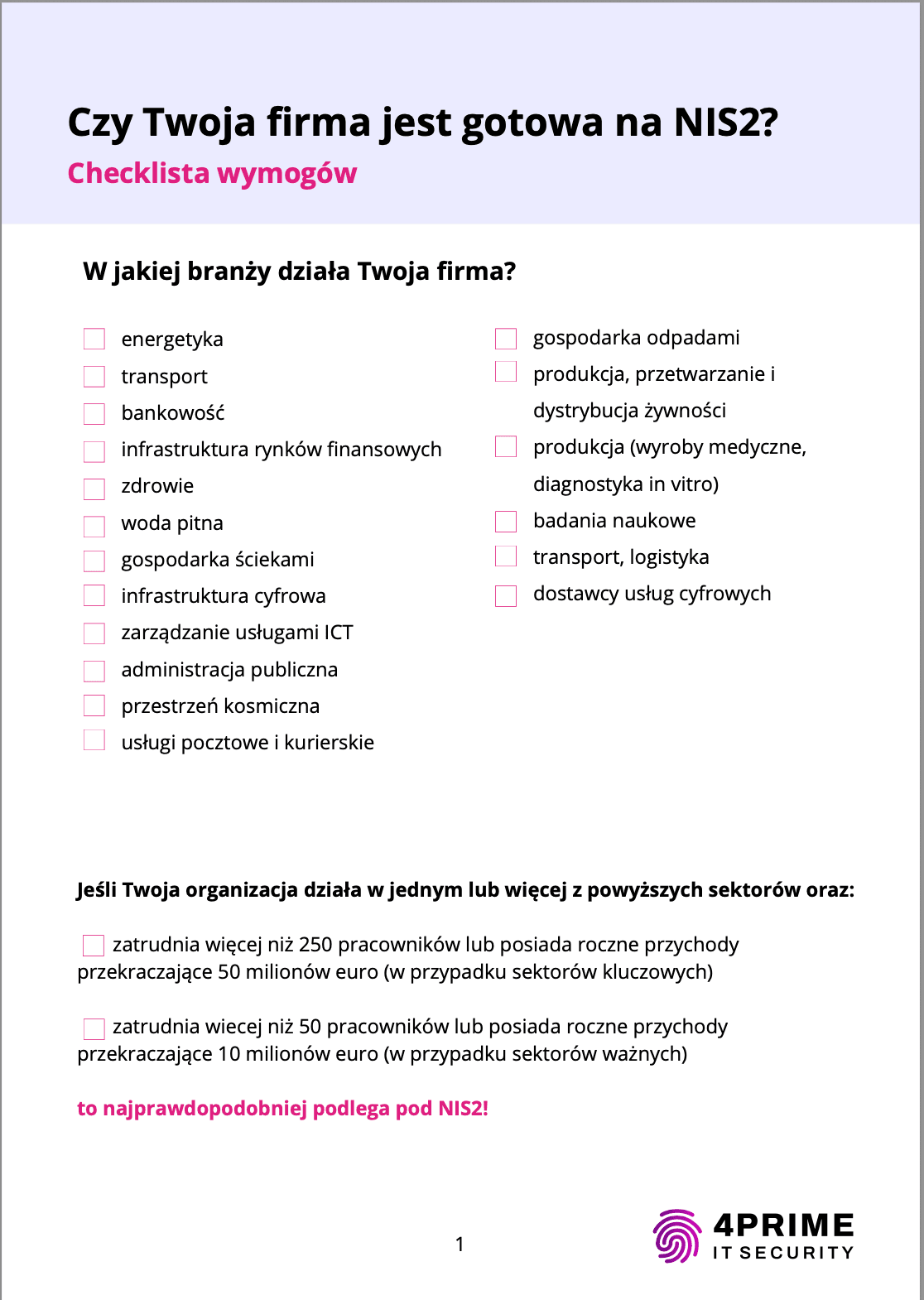
Checklista NIS2
our services

SOC360 analysts

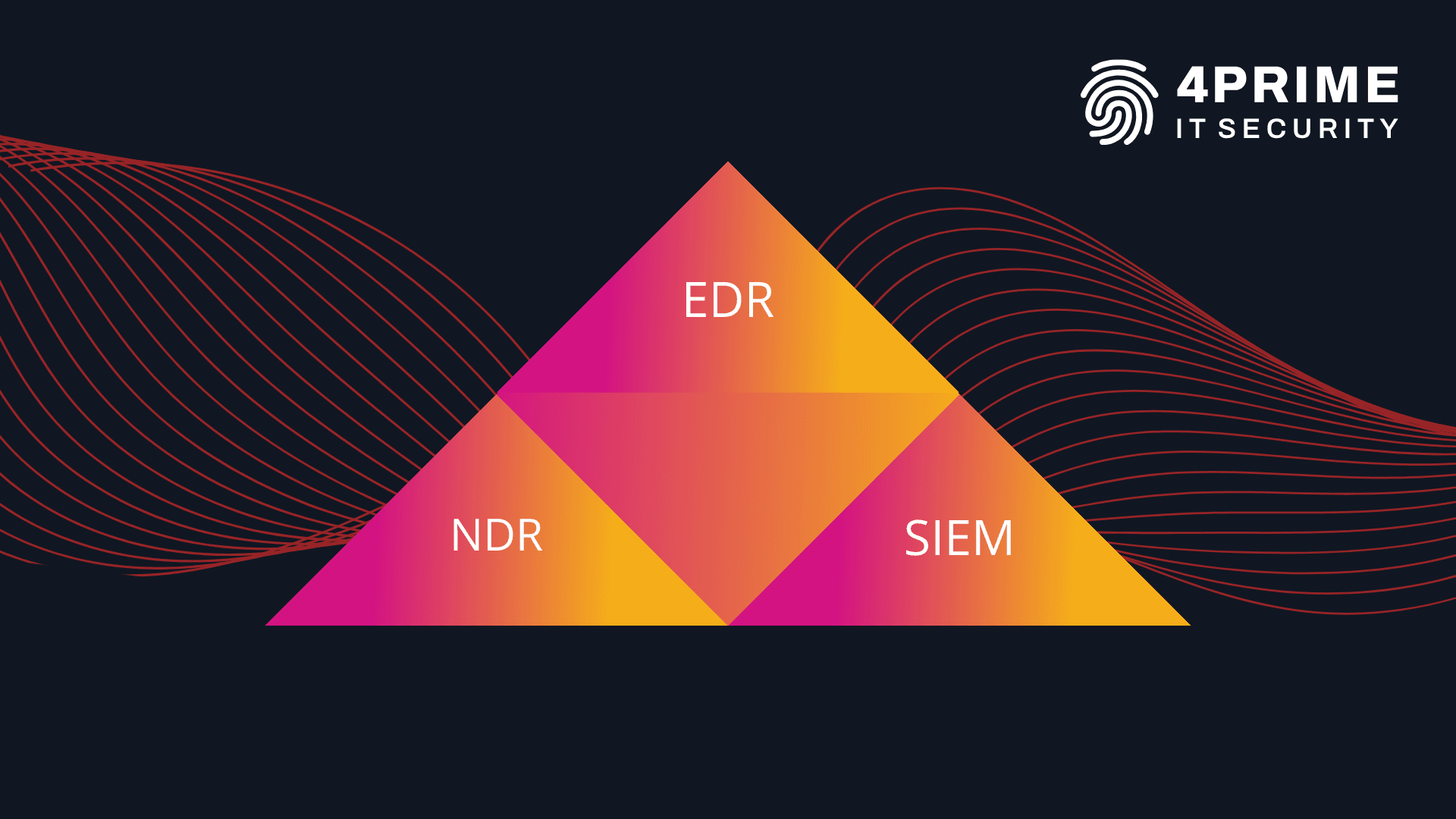
SOC360 is a team of forty highly qualified experts who analyze threats at their source, leveraging telemetry data from advanced EDR and NDR systems as well as other cybersecurity monitoring platforms. Our SOC service, enhanced with Managed Detection and Response (MDR), is based on a single-line model*, ensuring fast and effective incident response.

24/7 infrastructure monitoring based on proactive security systems (EDR, NDR) and SIEM analysis,

Effective alert analysis and real-time incident mitigation,

Threat Intelligence, Threat Hunting, Detection Engineering,

Detailed incident reports compliant with NIS2 requirements,

Vulnerability management,

Operational support during and after a security incident.

*A model that transforms traditional, multi-tiered and hierarchical security teams into a single, efficiently operating team in which all analysts have comparable high-level competencies, uniform training, and access to the same tools.

4Prime engineers

We offer comprehensive solutions by designing, integrating, and maintaining modern security systems. Our engineers have many years of experience implementing tools from over 40 leading vendors, supported by relevant certifications.
Fidelis Security
Fortinet
Delinea
Netskope
Cloudflare
SentinelOne
Palo Alto
Greycortex

Our certificates

Azure Security Engineer
Identity and Access Administrator
null
null
Security Operations Analyst
SentinelOne UNIVERSITY
null
null
null
null
null
null
null
null
Cloudflare Accredited Sales Engineer
Cloudflare Zero Trust Essentials
Fidelis Endpoint Professional

FAQs

Under the NIS2 Directive, the food industry is classified as an important sector, and the obligations primarily apply to medium-sized and large organizations that meet at least one of the following criteria:

≥ 50 employees ≥ EUR 10 million in annual turnover or balance sheet total

In practice, this means the need to:

  • implement a cybersecurity risk management process,
  • monitor and detect incidents,
  • report incidents to the appropriate authorities,
  • ensure business continuity,
  • and address supply chain security.

It is important to note that even smaller companies may fall under NIS2 if they play a significant role in the supply chain.

Preparing a food company to meet NIS2 requirements requires a comprehensive approach covering both IT and OT environments. A key step is conducting a risk assessment and identifying critical systems and production processes, followed by implementing appropriate security measures such as security monitoring (SOC), network segmentation, threat detection systems (EDR/NDR), and vulnerability management. Organizations should also develop incident response procedures, ensure the ability to report incidents quickly (e.g., within 24 hours), and implement business continuity and disaster recovery plans.

Equally important are securing the supply chain, providing regular employee training, and conducting periodic security audits to verify the effectiveness of implemented measures and compliance with regulations.

A cyberattack targeting production systems can alter parameters such as temperature, composition, or processing time, directly affecting product quality. In extreme cases, this may lead to product recalls and risks to consumer health.

Production control systems (PLC, SCADA), ERP/MES systems, quality monitoring solutions, and remote access used by vendors and service providers are among the most vulnerable. These areas most often serve as entry points for attackers.

Yes — it is possible to use solutions that do not disrupt operational continuity, such as network traffic monitoring (NDR), network segmentation, and access control. The key is to tailor technologies to the specific constraints of production environments.

Data protection should include access control (PAM), DLP solutions, and user activity monitoring. It is also important to log operations and control changes within production systems.

Read more

The attack on your company could have started a month ago.

Check how you can secure your organization today.